
Last updated November 25, 2026



Free roof inspection with deck photos before we talk money - GAF and Owens Corning certified installation
Roofing Warning Signs: A Redmond Homeowner’s Reference Guide
Granule loss on an asphalt shingle looks dramatically different on a dry July afternoon than it does on a wet November morning. Redmond homeowners who inspect their roofs after rain often walk right past significant bald spots, because a wet granule surface darkens and disguises the very wear they’re looking for. The same goes for moss that reads as cosmetic from the driveway but has already sent holdfasts under the tab edges, and for attic condensation that never shows a single drip inside the living space. This guide is about the warning signs that don’t depend on perfect lighting or a good ground-level viewing angle. We’ll show you how to read your Redmond roof from the attic out, what the evidence actually means, and when it’s time to call someone.
Styles & brands we work with
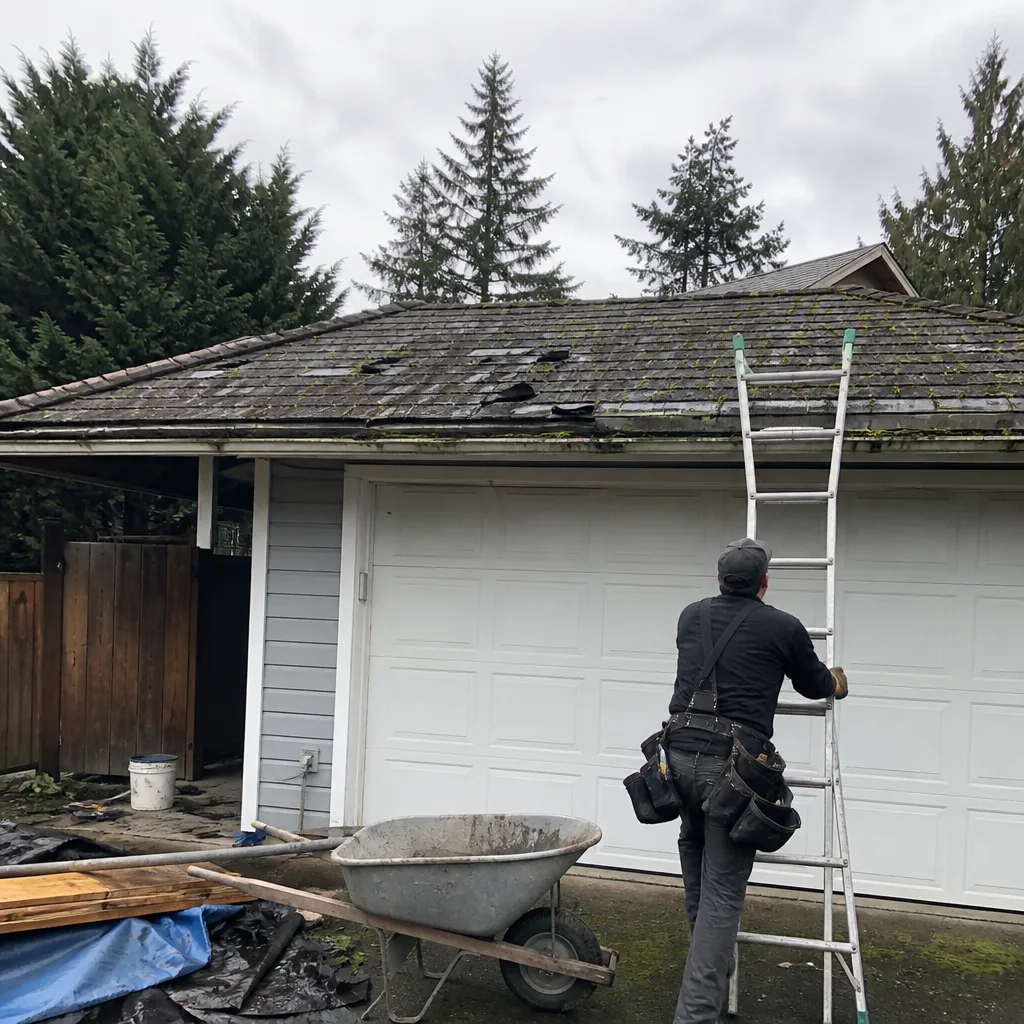
- Architectural shingles
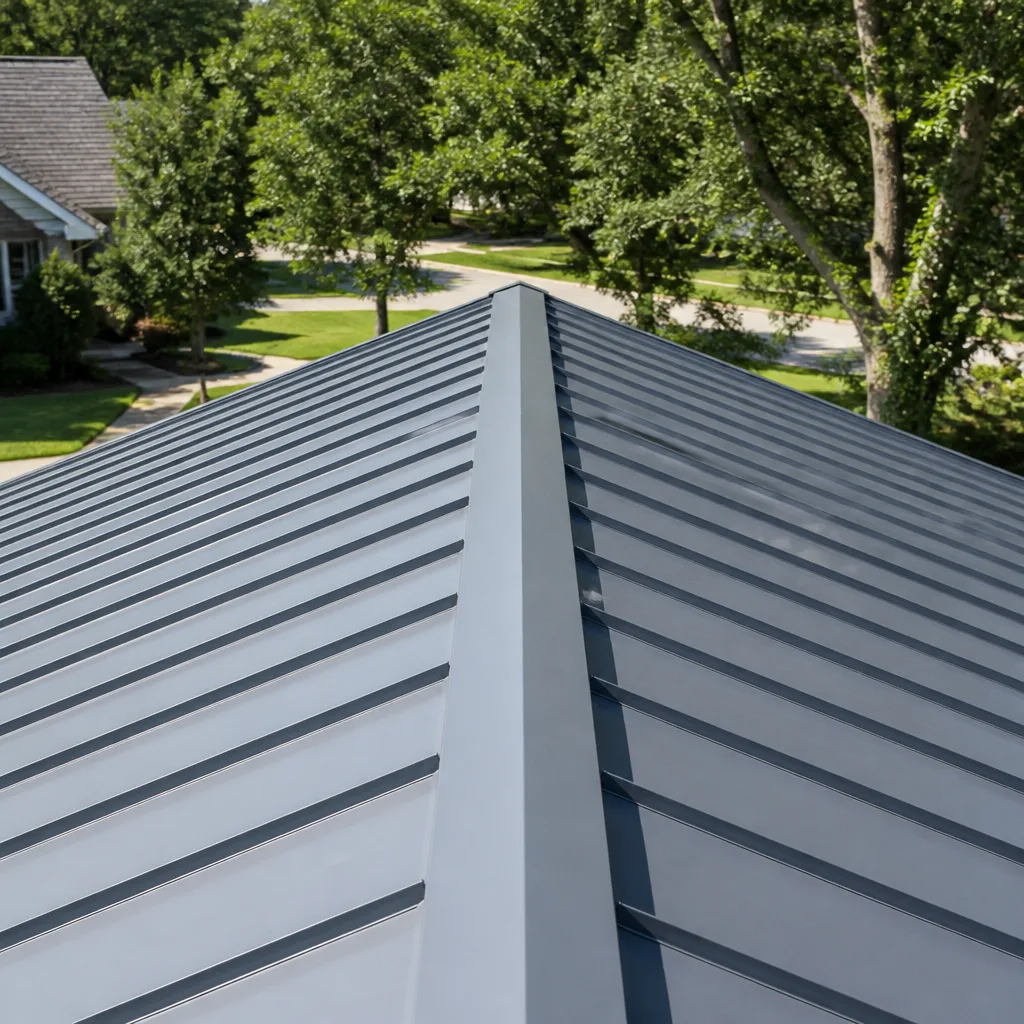
- Metal roofing
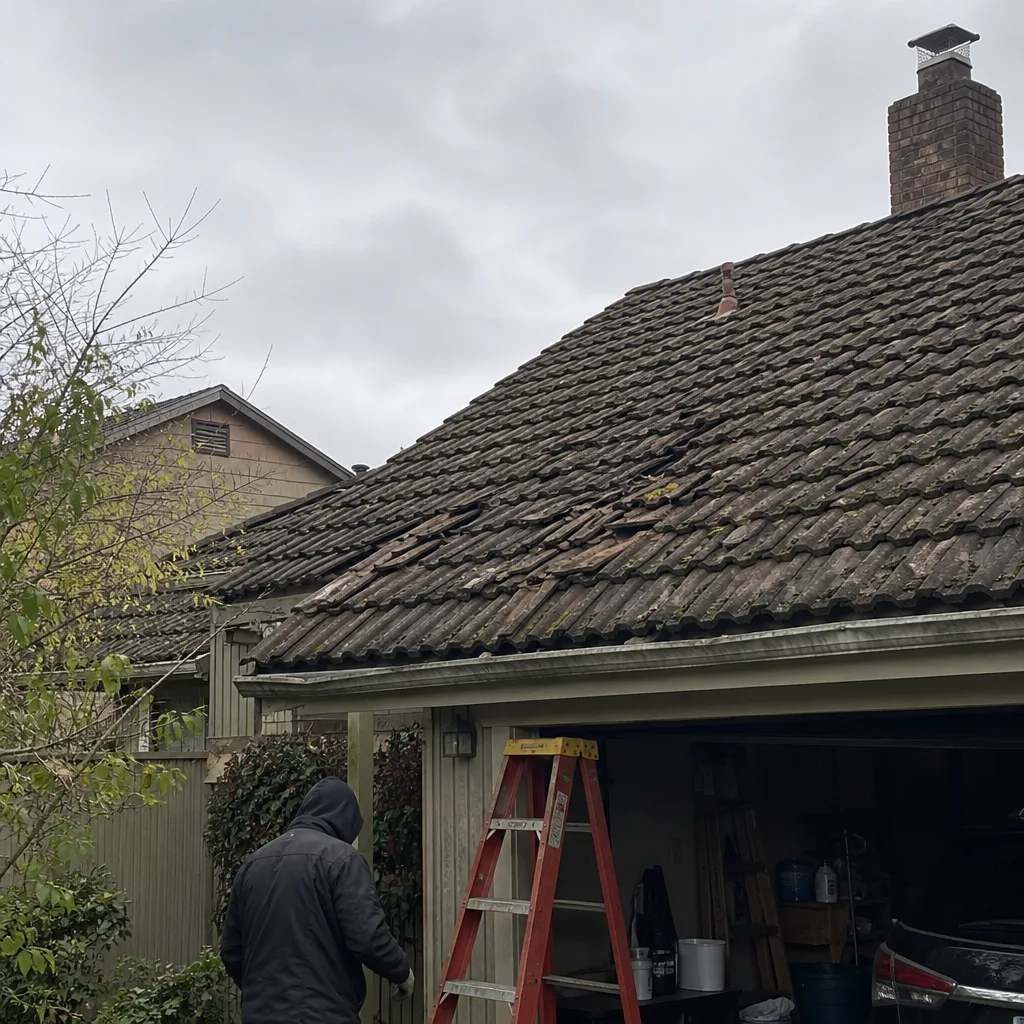
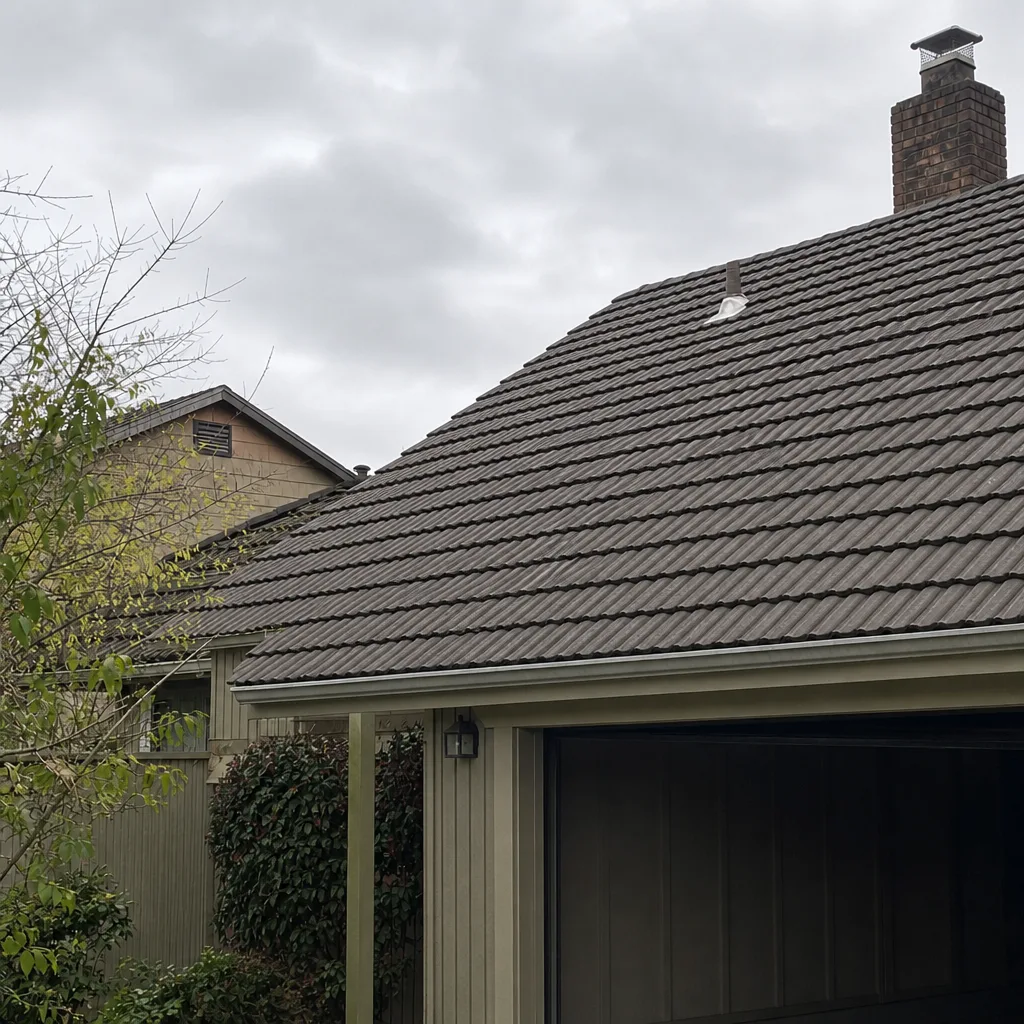
- Tile roofing
- GAF
- Owens Corning
- Flat & low-slope
Quick Answer
The most reliable roofing warning signs in Redmond are found indoors and in the attic first: rust-stained rafters, compressed insulation, daylight gaps at the ridge, and condensation on the roof deck. Exterior signs like gutter granule buildup, lifted shingle tabs around moss, and paint bubbling at the soffit confirm what the attic already told you. If you find staining plus a soft spot or daylight, get a professional assessment before the next wet season.
Table of Contents
- Start in the Attic, Not on the Roof
- Reading Moss: Surface Growth vs. Established Rhizoids
- Granule Loss: What Your Gutters Are Telling You
- Flashing Warning Signs on Redmond’s Wood-Frame Homes
- When a Sagging Ridge Line Is a Ventilation Problem
- Ventilation Math: Why CFM Matters More Than You Think
- Interior Condensation and the Wet-Deck Signal
- How Warning Signs Differ by Roofing Material
Start in the Attic, Not on the Roof
Before anyone climbs a ladder, the attic will tell you more about your roof’s real condition than an hour of standing in the yard. This is the single most useful habit we can pass along to Redmond homeowners: inspect from the inside out. The attic gives you information that sunlight and shingle color cannot, including moisture history, structural movement, and the actual airflow your roof is getting.
Here’s how to run an attic-first inspection. Do this on a dry day so you’re reading old evidence, not active weather.
- Look up at the rafters and roof deck sheathing. Rust-colored staining, dark rings, or water lines on the wood mean moisture has been present. Fresh wood is pale; stained wood is a record of past leaks or chronic condensation.
- Check the insulation for compression and dampness. Insulation that’s been crushed, matted, or is visibly wet near the eaves or under penetrations has lost most of its thermal value. Damp insulation is a slow-burn problem that leads to deck rot.
- Find the daylight. On a sunny day, small bright gaps at the ridge, at vents, or around pipe boots are direct openings for water. Any visible daylight is worth documenting.
- Feel for condensation. Frost or moisture beads on the underside of the roof deck in cold weather, or a clammy feel in the attic year-round, points to ventilation problems, not necessarily a failing roof surface.
- Smell the air. A musty, damp-wood smell is a strong signal of trapped moisture that often has nothing to do with a visible leak.
Redmond’s climate swings between wet winters and warm, dry summers, and that cycle stresses a roof repeatedly. Attic evidence accumulates over seasons, so a staining pattern you notice in October may date back to a February storm. Our technicians have up to 8 years of experience reading these patterns, and the first thing they do is confirm what the attic shows before anyone discusses the roof surface. If your attic inspection turns up staining plus a soft sheathing spot, that’s the moment to bring in a professional rather than wait it out.
Reading Moss: Surface Growth vs. Established Rhizoids
Not all moss is a problem. Surface moss that sits on top of the shingles is largely cosmetic and can often be cleaned without damage. The moss that matters is the moss with established rhizoids: root-like structures that have pushed under the shingle tab edges and lifted them enough to break the self-seal strip. Once that seal is compromised, wind-driven rain gets underneath, and the shingle’s protection is gone even though it still looks intact from the ground.
How do you tell the difference without climbing up? A few practical checks:
- Look for lifted tab edges. From the ground or a safely positioned ladder, notice whether shingle tabs around the moss clumps are standing up rather than lying flat. Lifted edges are the tell.
- Check the moss pattern. If it’s concentrated in north-facing valleys and shaded spots, it’s likely surface growth driven by moisture retention. If it’s aggressive and spreading across flat planes, the rhizoids may already be working under the tabs.
- Watch what happens after rain. Surface moss on a wet morning looks greener and puffier. Moss that’s been established for years tends to sit differently: thicker at the base, with visible debris caught in it.
Redmond’s tree cover and damp winters are moss-friendly, so a trim of overhanging branches and better attic ventilation both help slow future growth. But when moss has already lifted tab edges, aggressive cleaning can do more harm than good by tearing shingles that were holding on. That’s a job for someone who knows when to clean and when to plan for replacement instead. If your roof is nearing the end of its service life and moss has compromised the seal strips, it may be time to start pricing a roof replacement rather than pouring money into cleaning.
Granule Loss: What Your Gutters Are Telling You
Granules are the mineral surfacing on asphalt shingles, and their loss follows two very different patterns. Normal weathering produces a slow, steady shed you’d barely notice. Accelerated loss dumps a visible accumulation of granules into your gutters and at the base of downspouts over a short window, and that’s the sign that shingle failure is underway. The catch is that on a wet Redmond morning, the bare shingle deck darkens and the granules in the gutter look like ordinary grit. You have to read the volume and timing, not the color.
Here’s how to interpret granule accumulation by volume and timing:
Normal weathering
- A thin scatter of granules in the gutters after heavy rain.
- Consistent year over year, no obvious progression.
- Surfacing mostly intact across the roof, shingles still have texture.
Accelerated loss that signals failure
- A thick, sandy layer of granules piling up in gutters within a single season.
- Noticeable bare patches on the roof when you look from a dry, overhead angle.
- Granules collecting at downspout outlets and in yard drains.
- Shingle surfaces that feel slick or lack the mineral texture when dry.
The timing matters as much as the volume. If you cleaned the gutters a few months ago and they’re already loaded with granules, the shingles are shedding faster than normal weathering explains. Redmond’s wet winters can mask this, so we recommend checking the gutters on a dry day and photographing what you find for comparison. Once accelerated granule loss is confirmed across a large share of the roof, replacement is usually the more economical path than repair, because the shingle’s protective layer is gone. Take a close look with a shingle roofing specialist who can tell you whether the loss is cosmetic or a failure signal.
Flashing Warning Signs on Redmond’s Wood-Frame Homes
Flashing is the metal that seals the vulnerable joints where the roof meets walls, dormers, chimneys, and valleys. It’s the number one place water gets into a Redmond home, and the warning signs rarely show up on the roof itself. They show up below it. Because so much of Redmond’s housing is wood-frame construction, water that slips past flashing travels down interior cavities and shows up as staining on the finished surface, sometimes many feet from the actual entry point.
Watch for these specific flashing indicators:
- Rust staining on siding below step flashing. On homes with siding, brown or orange streaks just below a wall-roof junction are a direct pointer to failing flashing behind the siding.
- Interior wall staining at dormers. Water stains, discoloration, or bubbling paint on the inside face of a dormer wall mean the dormer flashing or the wall transition is letting water in.
- Paint bubbling at eave soffits. Bubbled or peeling paint on the soffit under the eaves usually signals moisture pushing outward from the wall-roof junction or from behind the fascia.
- Staining at chimney and skylight edges. Any discoloration around chimney bases or skylights is flashing-level evidence, not surface water.
- Valley debris and erosion. A valley that holds debris will eventually let water back up under shingles; rust or puffing at the valley metal is a sign the flashing is under stress.
We’ve found that flashing-related leaks are the trickiest to trace because the entry point and the visible symptom are rarely in the same place. In our experience, Redmond homeowners often assume they’ve got a plumbing leak when the stain is actually a flashing failure. If you find any of the signs above, don’t wait for a dry spell to prove it. Get it assessed while the evidence is fresh. A qualified roofer can walk the wall-roof junctions and confirm what’s happening before the interior damage gets expensive.
When a Sagging Ridge Line Is a Ventilation Problem
A sagging ridge line looks alarming, and the instinct is to assume structural failure. In many Redmond homes, the cause is far more mundane: inadequate ridge ventilation. When a roof doesn’t breathe properly, the deck and framing underneath warm up and cool down unevenly, and over time the sheathing can cup and the ridge can appear to slump. That’s a ventilation problem, not a structural collapse, and the fix is different from what a structural engineer would recommend.
How do you tell the difference before calling a structural engineer? A few practical indicators point toward ventilation:
- The sag is gradual and uniform. A ventilation-related sag tends to run evenly along the ridge. A localized, sharp dip points more toward framing movement.
- It’s paired with attic symptoms. If you also see condensation, frost, or compressed insulation, ventilation is the more likely driver.
- Exterior walls and framing look straight. Check plumb at the exterior corners; if the walls aren’t moving, the ridge sag is more likely a roof-deck issue.
- The home has few or blocked vents. A roof with no ridge vent, blocked soffit vents, or gable vents that have been covered up is a strong candidate for ventilation-driven problems.
- No ceiling cracks or door misalignment. Structural movement typically shows as cracking in ceilings and doors that no longer close cleanly. If none of that is present, ventilation is the first thing to rule out.
This matters because a homeowner who jumps straight to a structural engineer can end up paying for an assessment that points back to the roof. Our recommendation: get a roofing professional to read the attic and the ventilation first. If the evidence points to a genuine structural concern, they’ll tell you to bring in an engineer. If it’s a ventilation issue, the fix is airflow, and a proper new roof installation with correctly calculated ventilation is the durable solution.
Ventilation Math: Why CFM Matters More Than You Think
CFM, or cubic feet per minute, is the measure of how much air moves through your attic. It’s the metric most homeowners never think about, and it’s the one that quietly determines whether your roof lasts its full service life. When a roof has too little exhaust ventilation, heat and moisture build up under the deck, and the moisture has nowhere to go but into the wood. Redmond’s wet winters make this a real problem: a poorly vented attic holds moisture through the damp season and dries too slowly between storms.
What you can check as a homeowner:
- Ridge vent presence. Look at the ridge line from inside the attic. A continuous ridge vent should be visible; if it’s absent or blocked, exhaust is limited.
- Soffit vent integrity. Intake vents at the eaves should be clear of insulation and debris. Insulation blown directly against the soffit blocks the intake and stalls the whole system.
- Vent-to-attic ratio. A properly balanced attic has both intake and exhaust in the right proportion. If you can’t tell by looking, ask a roofer to calculate it.
- Attic temperature behavior. An attic that runs noticeably hotter than outdoor air in summer and holds moisture in winter is a ventilation warning sign.
Why does airflow matter to Redmond homeowners specifically? Because the failure mode here is hidden. Inadequate exhaust ventilation leads to what we call a wet-deck signal: condensation forming, then soaking into the sheathing, then showing up as staining and rot that you only notice after it’s already damaged the structure. The good news is that ventilation is planned into the roof, not added later, which is why a replacement is the natural time to get it right. When you’re selecting materials, the ventilation plan and the shingle or metal system should be designed together. Whether you’re weighing shingle roofing or a different profile, tell your roofer your attic’s airflow story.
Interior Condensation and the Wet-Deck Signal
Interior condensation is the warning sign that fools the most Redmond homeowners because it looks like a leak but often isn’t one. Water beading on the roof deck, frost on the underside of the sheathing, or a clammy feel in the attic points to moisture that’s condensing out of warm, humid interior air as it hits a cold roof surface. If that moisture has nowhere to vent, it soaks into the deck and turns into rot and staining that look exactly like a failed roof.
The wet-deck signal shows up in a consistent sequence:
- Warm, humid air rises into the attic from the living space through gaps in the ceiling plane.
- The cold roof deck causes condensation on the underside of the sheathing.
- The moisture soaks into the wood and insulation over repeated cycles.
- Staining and rot appear and can be mistaken for surface leaks.
- Mold and rot damage progress until the deck needs replacement.
The diagnostic question is: does the moisture appear across flat planes and in cold-weather months, or does it appear in one localized area after a rain event? Condensation tends to appear uniformly and seasonally. A leak appears in one spot and after rain. Getting this distinction right matters because the fix is different: condensation is solved with ventilation and air sealing, while a leak may need flashing or surface work. Redmond’s damp climate makes this even harder to read, because the humidity is high enough that condensation can form on otherwise healthy roofs. If you’re seeing interior moisture and can’t pin it down, get a roofer to look before the wood pays the price.
How Warning Signs Differ by Roofing Material
Warning signs don’t read the same across material types. A shingle roof fails in different ways than a tile roof or a metal roof, and Redmond homeowners with any of the three benefit from knowing their own material’s tell-tales. We install all three systems, and the material-agnostic approach means the signs below are worth reading against your actual roof rather than a generic checklist.
Asphalt shingle warning signs
- Accelerated granule loss in gutters, as described earlier.
- Curling, lifting, or missing tabs around valleys and ridge lines.
- Bald patches where the mineral surface has worn away.
- Rust streaks below flashing on wood-frame walls.
Tile roofing warning signs
- Cracked or chipped tiles that let water past the underlayment.
- Slipped tiles on the roof plane, often after wind events.
- Moss and algae growth between tiles, which can trap moisture under the tile field.
- Visible underlayment at the eaves, signaling movement.
Metal roofing warning signs
- Loose or missing fasteners at panel seams.
- Rust streaks at panel edges or penetrations.
- Sealant deterioration around chimneys and skylights.
- Oil canning (rippling) that develops over time, sometimes a sign of substrate movement.
Each material category calls for a different installer skill set and different tools, and the diagnostic reading differs too. When you’re choosing materials, a roofer who works across all three can tell you what a tile or metal roof’s failure profile looks like before you commit. Whether you choose GAF, Atlas, or one of the other products we install, the material should fit your Redmond home’s climate exposure, not the installer’s habit. When you’re comparing options, ask how each material fails in our wet-winter, dry-summer cycle. That’s the right question, and a brand-neutral roofer will answer it straight.
Common Mistakes to Avoid
- Judging the roof only after rain. Wet surfaces hide the very signs you’re looking for. Inspect in dry, overhead light, and photograph what you find so you can compare season to season.
- Assuming moss is cosmetic. Surface moss is usually fine; moss with lifted tab edges is not. If the tabs are standing up, the self-seal strip is already compromised, and cleaning won’t fix it.
- Calling a structural engineer before a roofer. In Redmond, a sagging ridge line is more often a ventilation problem than a structural failure. Start with a roofer who can read the attic, then escalate if needed.
- Ignoring paint bubbling at the soffit. This is easy to treat as a painting issue, but it usually signals moisture behind the exterior surface at the wall-roof junction. Don’t repaint until you know why it bubbled.
- Cleaning gutters without checking what’s in them. Granules are the cheapest roof diagnostic you have. Note the volume and timing, not just the fact that the gutters are dirty.
- Treating interior condensation as a leak. A leak shows up in one spot after rain; condensation shows up across flat planes and in cold weather. Misreading this leads to the wrong repair.
- Choosing shingle, tile, or metal based on a single brand push. A roofer who installs only one manufacturer may steer you toward inventory rather than the right material. Ask what fits your climate exposure and how each fails over time.
When to Call a Professional
Most warning signs deserve a professional look once they cross from cosmetic into structural or moisture-related territory. Call a roofer if you find staining on rafters or interior walls, soft sheathing in the attic, daylight gaps at the ridge or penetrations, or moss with lifted tab edges across a wide area. Call also if your gutters are loading with granules faster than seasonal weathering explains, or if a sagging ridge line has you worried about the structure. These are the signs that justify a free assessment rather than a wait-and-see approach.
Redmond Roofing Pros is a roofing specialist working across shingle, tile, and metal systems. We offer free estimates in Redmond. Call (425) 696-5053. We answer 24/7, and fast dispatch runs from 7am to 7pm, Sunday through Friday. The written estimate sets the final price, and we work from it with no change orders, so the number you’re quoted is the number you plan around. If you’ve read this far, you already know more about your roof than most homeowners. Let us confirm what you’ve found and tell you what it actually needs.
Frequently Asked Questions
The first warning signs usually show up indoors and in the attic before they show up on the roof itself: rust-stained rafters, compressed or damp insulation, daylight gaps at the ridge, and condensation on the roof deck. Exterior signs like gutter granule buildup and moss with lifted tab edges confirm what the attic already told you. Redmond’s wet winters make these easier to miss from the ground, so inspect on a dry day. Call (425) 696-5053 for an exact assessment. Estimates are free.
Surface moss is mostly cosmetic, but moss with established rhizoids that have lifted tab edges is a real problem because it has broken the self-seal strip and lets wind-driven rain under the shingles. Look for tabs that stand up around moss clumps rather than lying flat. If you see lifted edges across a wide area, it’s time for a professional look. Call (425) 696-5053 for a free estimate.
Normal weathering leaves a thin scatter of granules in the gutters. Accelerated loss leaves a thick, sandy layer within a single season, bare patches visible in dry overhead light, and granules collecting at downspout outlets. Timing matters as much as volume. If you cleaned the gutters recently and they’re already loaded, the shingles are shedding faster than normal. Call (425) 696-5053 for an exact quote on what’s happening. Estimates are free.
In many Redmond homes, a sagging ridge line points to inadequate ventilation rather than structural failure. Ventilation problems cause uneven deck movement that shows as a gradual slump, while true structural movement usually comes with ceiling cracks or doors that won’t close cleanly. Get a roofer to read the attic and the airflow first before calling a structural engineer. Call (425) 696-5053 for a free assessment.
A leak appears in one localized spot and after rain, while condensation appears across flat planes and in cold weather. If you see frost on the roof deck in winter, or moisture beads spread uniformly across the sheathing, you’re likely looking at a ventilation and condensation issue. A leak shows up around a flashing point. Getting the distinction right saves the deck from ongoing moisture. Call (425) 696-5053 for an exact diagnosis. Estimates are free.
Redmond’s wet winters and dry summers stress the roof in a specific cycle: prolonged moisture through the damp season, then rapid drying in summer. That cycle encourages moss growth, masks granule loss, and makes condensation a recurring issue in poorly vented attics. Wood-frame construction also routes flashing leaks into the interior, which is why we recommend attic-first inspections. Call (425) 696-5053 to talk through what you’re seeing. Estimates are free.
The Bottom Line
The roofing warning signs that matter most in Redmond are the ones you can’t see from the driveway on a sunny day. Start in the attic: read the rafters, the insulation, the daylight, and the condensation. Then move to the gutters for granule evidence and the siding and soffits for flashing tell-tales. Keep moss in perspective and don’t panic about a sagging ridge before a roofer has ruled out ventilation. Our technicians have up to 8 years of experience reading these signs across shingle, tile, and metal systems, and we work with manufacturers like GAF, Atlas, and Tamko to make sure the material fits your roof, not the other way around. When you’re ready to act on what you’ve found, Redmond Roofing Pros is here for a straight assessment.
Call (425) 696-5053 for a free estimate. We answer 24/7. Fast dispatch from 7am to 7pm, Sunday through Friday.
Written by the team at Redmond Roofing Pros.
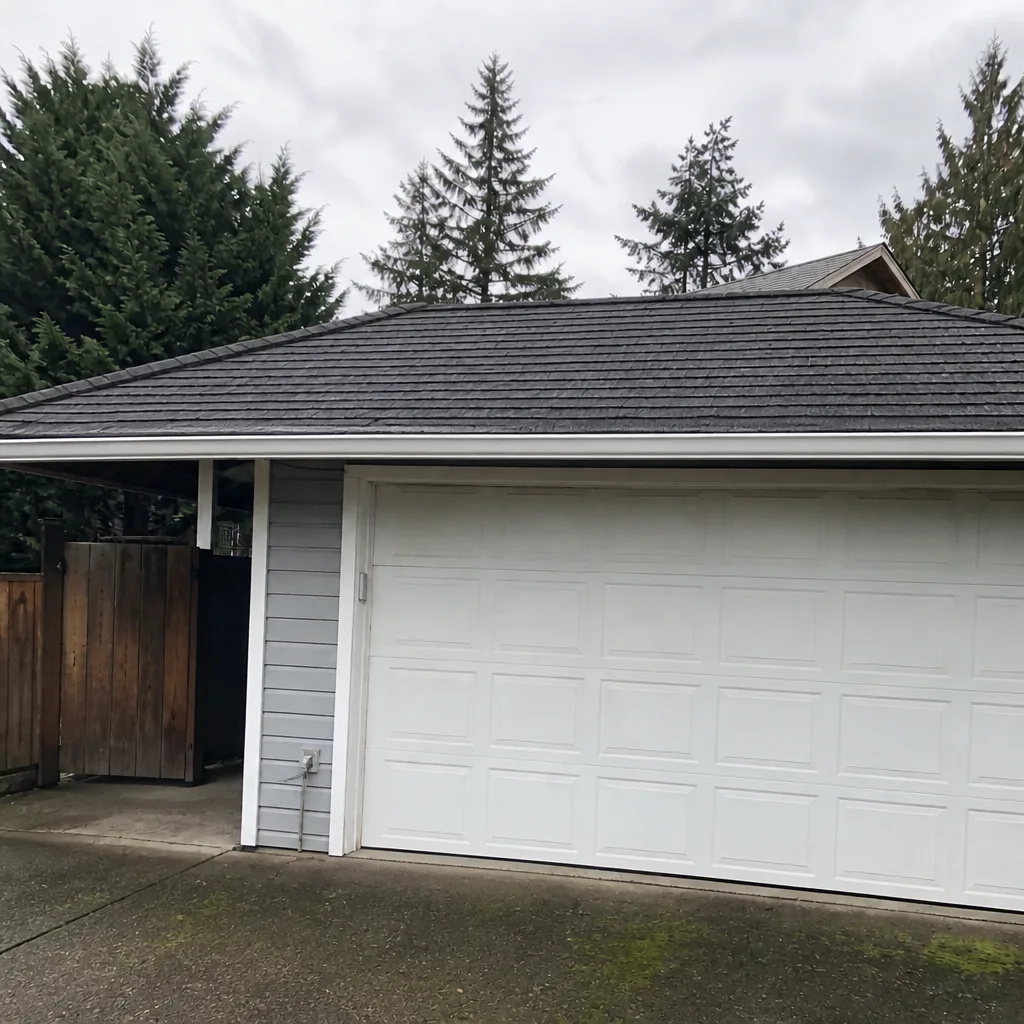
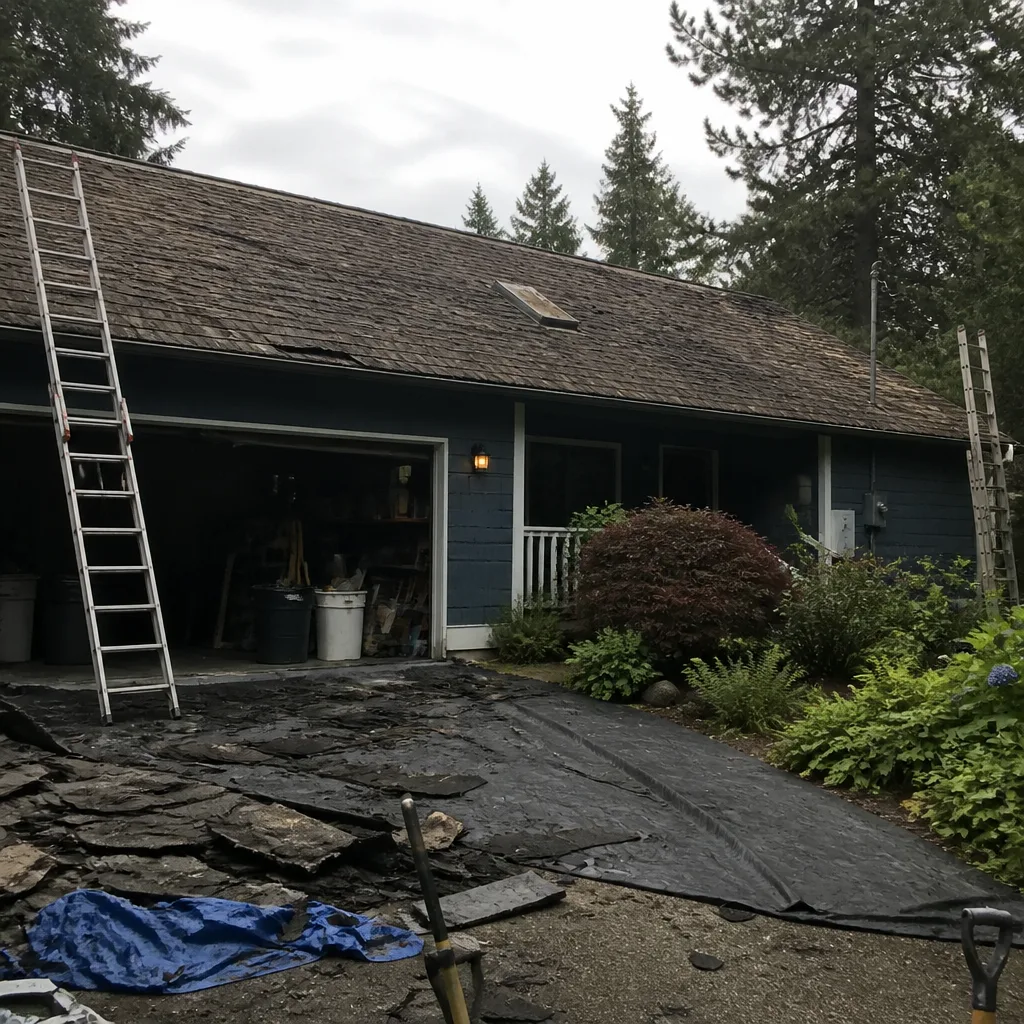
See the difference
 Before
 After
 Before
 After
 Before
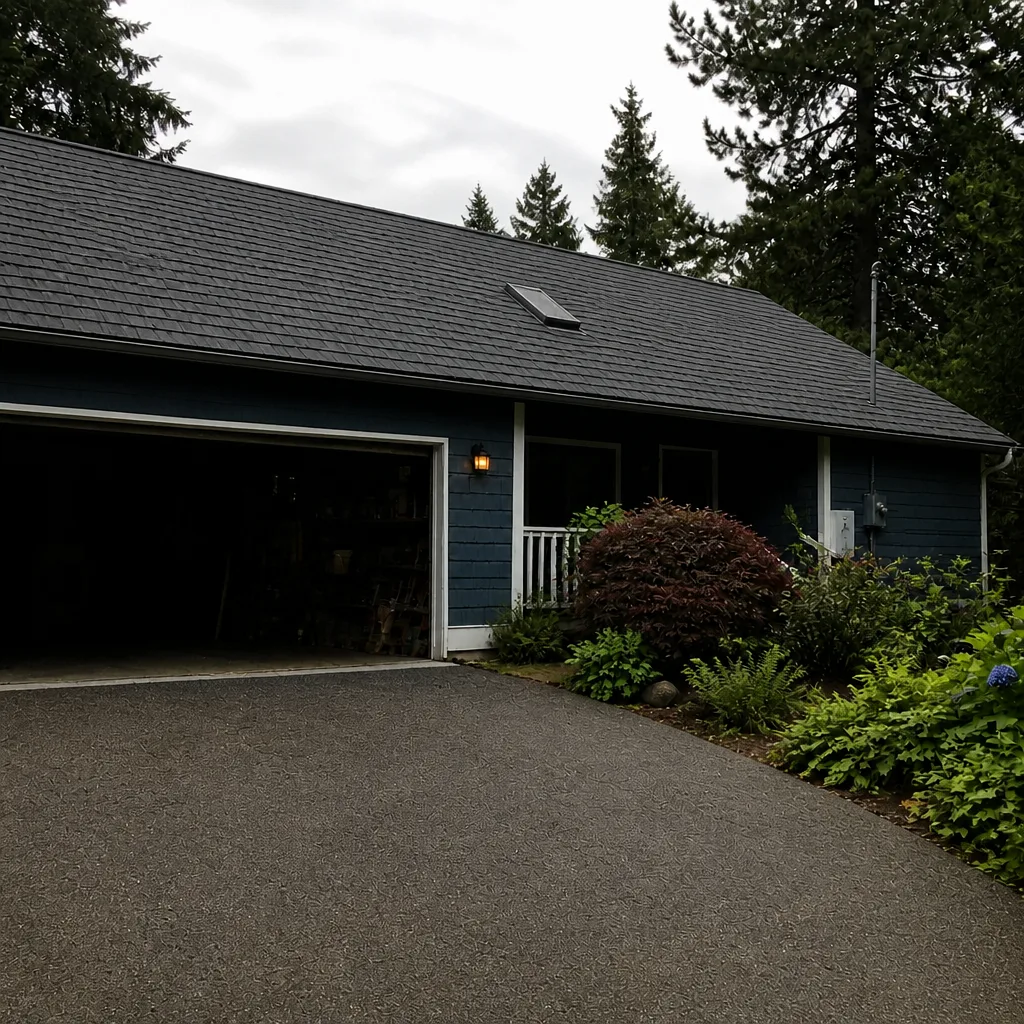 After